How to Plan and Install Home Theater Wiring
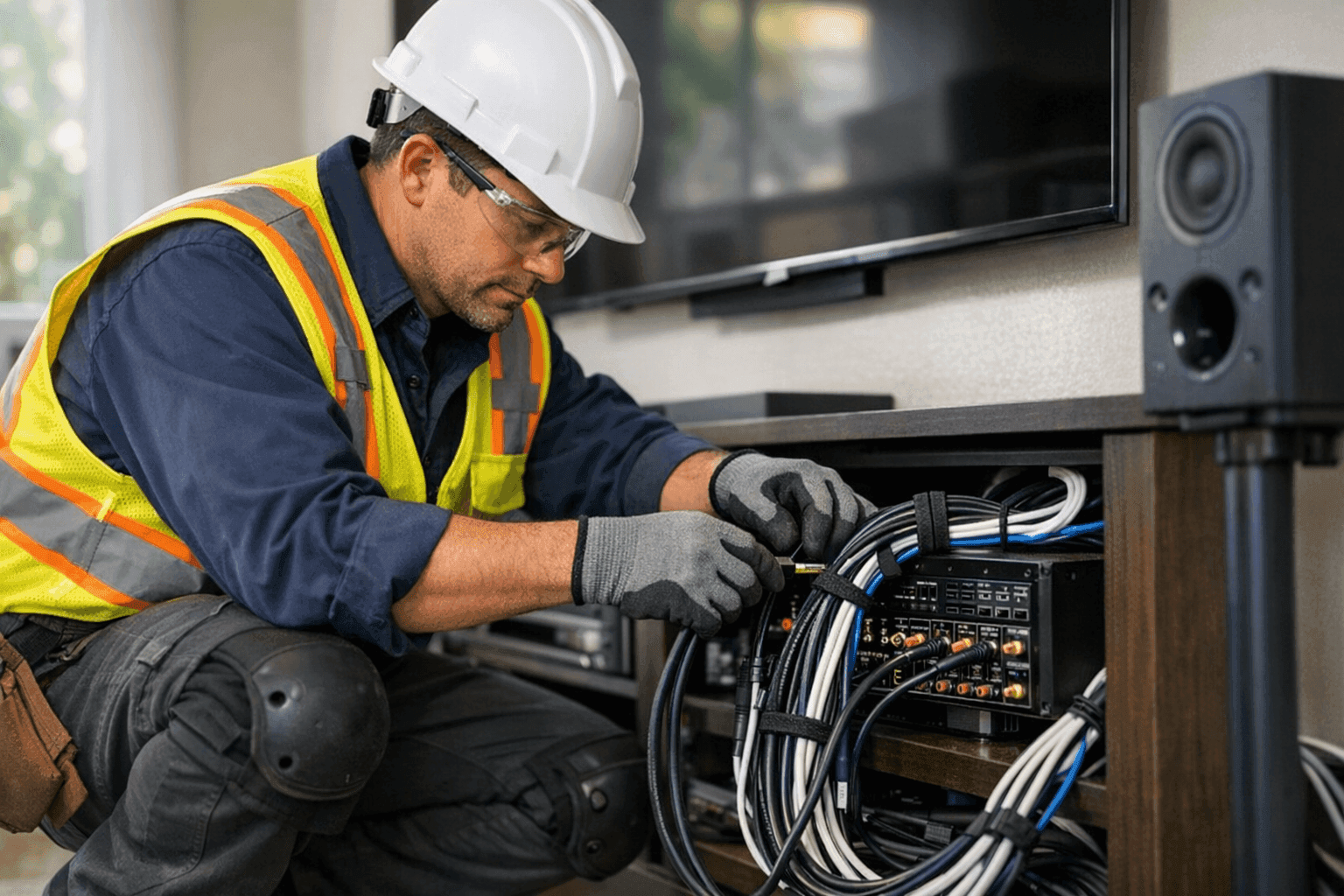
Are you dreaming of movie nights that feel like a trip to the cinema—without leaving your couch? A home theater can make any living room the heart of your house. But before you hit play on the popcorn, safe, smart wiring is where every blockbuster experience starts.
At Angelic Electric, we've seen what happens when wires are tangled like spaghetti behind the TV. Unreliable connections. Safety hazards. Sound that fizzles instead of soars. Let's walk through how to plan and install home theater wiring that delivers on every front.
Planning Home Theater Wiring
Every home theater project begins with a vision: where will your screen go? Where do you want speakers? How will you hide the wires so your space feels inviting, not cluttered?
Grab a notepad and sketch your room. Mark the TV wall, seating, outlets, and possible speaker spots. Consider:
- Speaker placement: Front, center, surround, and subwoofer positions.
- Equipment location: Where will you store receivers, gaming consoles, or streaming boxes?
- Power needs: Will you need new outlets or surge protection?
- Wiring pathways: Are you running wires behind drywall, under carpet, or through ceilings?
Remember, the best plans are flexible. Leave room for upgrades—today’s home theater might include a projector, but tomorrow you might want smart lighting or hidden in-wall speakers.
Wiring Types and Layout Tips 🎯
Wiring is the backbone of any home theater. Like veins feeding a beating heart, the right cables keep sight and sound flowing.
Common wiring types include:
- Speaker wire: Usually 12- to 16-gauge, oxygen-free copper for clear sound.
- HDMI cables: Carry high-definition video and audio between devices.
- Ethernet (Cat6): For streaming and smart features.
- Coaxial: For cable TV or satellite.
- Low-voltage control wires: For automation and remote control systems.
Layout tips:
- Bundle cables by type—never twist speaker and power wires together.
- Keep signal cables away from high-voltage lines to avoid interference.
- Plan extra conduit or raceways for future upgrades.
- Label each wire at both ends. You’ll thank yourself later.
Want more on wiring types? The National Electrical Code (NEC) sets standards for safe installation—your guidebook for every step.
Installation and Safety Considerations
Safety is the real star of the show. Even low-voltage systems can spark trouble if installed carelessly.
Safety tips:
- Always shut off power at the breaker before working on wiring.
- Use only UL-listed components and connectors.
- Don’t overload circuits—calculate the wattage of all your devices.
- Check for existing wiring or plumbing behind walls before drilling.
- Local code may require permits for major electrical work. Check with your city or county.
Hiring a licensed electrician means peace of mind. They know the codes, spot risks you might miss, and ensure your system is built to last.
Cable Management and Integration
A tidy room is a happy room—and a safe one. Poor cable management can cause signal issues, trip hazards, and even fires.
Best practices for cable management:
- Use cable raceways or conduit to hide wires along walls and baseboards.
- Fasten cables with clips or straps—never staple through the wire.
- For wall-mounted TVs, consider in-wall rated wires.
- Route cables away from heat sources and moving parts.
- Integrate with other systems—smart lighting, security, or home automation—for seamless control.
A well-integrated system makes life easier. Imagine dimming the lights, lowering the projector, and starting your movie—all with one remote.
Professional Installation Benefits 🛠️
DIY has its place, but home theater wiring is not the spot to cut corners. Here’s why professional installation pays off:
- Code compliance: Licensed electricians follow NEC and local rules.
- System performance: Properly installed wiring reduces signal loss and interference.
- Future-proofing: Pros anticipate upgrades and leave room for growth.
- Warranty protection: Many manufacturers require professional installation for valid warranties.
- Safety: Trained eyes spot hazards before they become problems.
Angelic Electric specializes in low-voltage systems and installations that power home theaters, smart homes, and more.
Quick Safety Checklist for Homeowners
Before you start, run through this quick list:
- ✅ All power OFF at the breaker?
- ✅ Right wire type and gauge selected?
- ✅ Outlets & Switches near you rated for your devices’ load?
- ✅ Tools ready—wire strippers, voltage tester, drill?
- ✅ Safety glasses and gloves on hand?
- ✅ Permits, if needed, secured?
If you answer “no” to any, pause and consult with a professional.
DIY vs. Call a Pro
Some handy homeowners can run basic speaker wire or mount a TV. But when your plan calls for in-wall wiring, new circuits, or adding outlets, it’s time to call an electrician.
Ask yourself:
- Are you comfortable working with electricity?
- Do you understand local code?
- Will your insurance cover DIY work if there’s a problem?
If in doubt, bring in help. Angelic Electric offers residential Wiring & Circuits and full system design.
What Pros Do On Arrival
Curious what happens when an electrician contractor arrives for your home theater project? Here’s the play-by-play:
- Site walk-through: Assess layout, existing wiring, and your needs.
- Load calculation: Make sure circuits can handle new gear.
- Routing plan: Map cable paths for safety and concealment.
- Installation: Run wires, install outlets and plates, terminate connections.
- Testing: Every connection is checked for performance and safety.
- Cleanup: No mess, no loose ends—just a movie-ready room.
Prevention & Maintenance
Your home theater wiring shouldn’t be “set and forget.” Like any part of your home, it benefits from a periodic checkup.
- Inspect cables for wear, pinching, or loose connections.
- Test outlets and surge protectors regularly.
- Upgrade cables as tech advances—today’s HDMI may be tomorrow’s bottleneck.
Routine electrical safety inspections help catch issues early.
Costs & Time Factors
How much will this cost, and how long will you be living in a construction zone? It depends.
- Simple systems: Running exposed wires and connecting basic speakers can be done in a few hours.
- In-wall wiring: Takes more time—often a full day or more.
- Complex systems: Multi-room audio, integrated lighting, or automation? Budget for a few days and a higher investment.
Remember, cutting corners on wiring can cost more in repairs and headaches down the line.
When It’s an Emergency
Buzzing outlets, flickering lights, or warm wall plates are red flags. If you smell burning plastic or see sparks, shut off power at the main panel and call for emergency service immediately.
Common Mistakes to Avoid
- Running speaker wire next to power lines, causing interference.
- Using the wrong gauge wire—thin wire = weak sound.
- Failing to plan for future upgrades.
- Overloading circuits.
- Forgetting surge protection for sensitive electronics.
Seasonal Considerations
Humidity, temperature swings, and even rodents can affect wiring, especially in basements or attics. Choose quality materials and schedule regular maintenance to keep your system running year-round.
Signs of Trouble
- Static or hum in speakers.
- Devices randomly losing power.
- Tripped breakers or blown fuses during movie nights.
- Visible damage to wires.
If you notice any of these, it’s time to call your local electrician.
Timeline & Disruption
Worried about turning your living room into a construction site? Good planning means minimal mess and fast results. Most installations can be done with little disruption—especially when you work with an experienced team.
Materials & Equipment Checklist
- In-wall rated speaker wire and HDMI cables
- Outlet boxes and wall plates
- Cable raceways or conduit
- Voltage tester
- Wire strippers and fish tape
- Surge protectors and power conditioners
A well-equipped electrician arrives with all this and more, ready to get the job done right.
Ready to transform your space? Angelic Electric is your go-to for reliable, safe Wiring & Circuits and home theater installations.
Call Angelic Electric now — or reach us anytime at 844-440-1817 .