How to Safely Upgrade and Relocate Home Electrical Panels
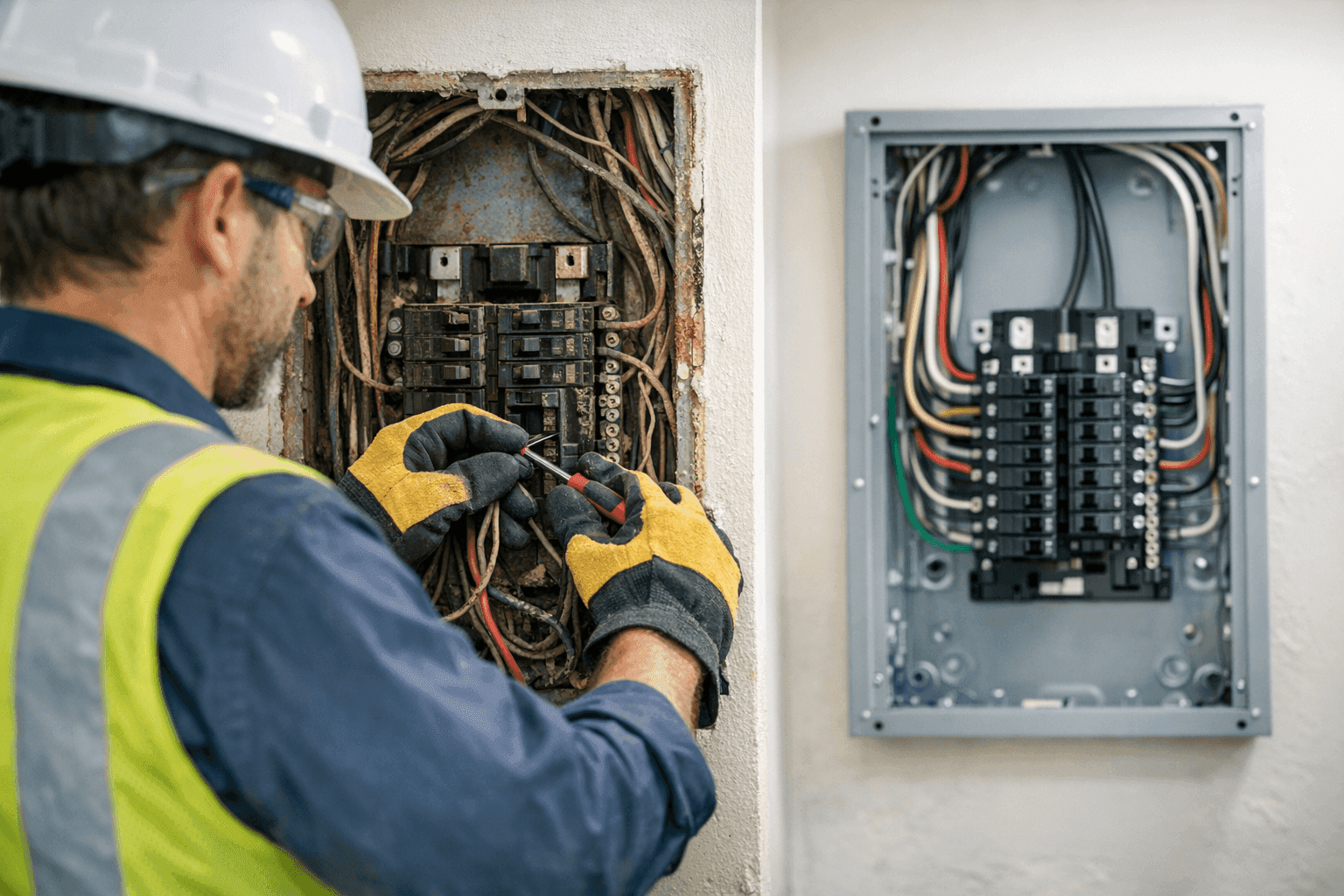
Is your home’s electrical panel older than your favorite pair of sneakers? Or maybe you’ve outgrown its capacity with new appliances, a remodeled kitchen, or an EV charger. You’re not alone. Every year, thousands of homeowners realize their panel is no longer up to the challenge.
At Angelic Electric, we know that working with panels and breakers isn’t just about keeping the lights on. It’s about safety, peace of mind, and powering your future without risk.
Why and When to Upgrade or Relocate Your Electrical Panel ⚡
Think of your electrical panel as the heart of your home’s nervous system. As your family grows or your home evolves—through renovations, new gadgets, or added rooms—your heart needs to keep up. Here’s when you should consider an upgrade or relocation:
- Remodels & Expansions: Adding a kitchen, bathroom, or finishing a basement? New circuits and higher loads demand a panel that can handle it.
- Safety & Code Compliance: Older panels (especially those from the 1960s–80s) may not meet current National Electrical Code (NEC) requirements. Outdated panels, like Federal Pacific or Zinsco brands, are notorious for safety risks.
- Frequent Breaker Trips: If your breakers trip more often than your smoke alarm chirps, your panel could be overloaded.
- Home Automation & Modern Appliances: Smart homes, EV chargers, and energy-hungry appliances all require modern electrical infrastructure.
- Relocation for Accessibility: Sometimes, panels are tucked into tight closets or behind obstacles. For safety and future maintenance, moving them makes sense.
Quick Safety Checklist Before You Start
- Never remove a panel cover or touch wires if you’re not trained.
- Check for visible rust, scorch marks, or buzzing sounds—these are red flags.
- Confirm your main shutoff is accessible in an emergency.
- Review your homeowner’s insurance for electrical upgrade requirements.
If in doubt, call a licensed electrician. Electrical panels are not the place for experiments.
DIY vs. Call a Pro: Why the Difference Matters
Upgrading or moving a panel isn’t like changing a lightbulb. It’s more like open-heart surgery for your home. The risks? Electrical shock, fire, or even voided insurance.
A licensed electrician from Angelic Electric brings more than just tools. They bring code knowledge, safety protocols, and years of troubleshooting under their belt. Choosing a pro means your upgrade is safe and legal.
What to Expect: The Professional Process
1. Planning and Assessment
- Load Calculation: We tally up your electrical needs, from Outlets & Switches near you to heavy-duty appliances.
- Site Inspection: We check where your current panel sits and where a new one could go for best access.
- Code Review: We reference the latest NEC and local requirements to ensure everything’s above board.
- Discussion: Your plans matter—are you adding a pool, installing an EV charger, or prepping for future expansion?
2. Permitting and Coordination
- Permits: No shortcuts. Angelic Electric files all required permits with your city or county.
- Utility Coordination: Sometimes, we need the utility company to shut off power at the street. We handle all the paperwork and scheduling.
3. Shutoff and Safe Disconnection
- Main Power Off: All power is safely shut down—not just at the panel, but at the meter if needed.
- Testing: We verify with meters and voltage testers that everything is truly off.
4. Panel Removal and Preparation
- Old Panel Removal: Carefully, we disconnect and remove your existing panel, labeling wires so nothing gets mixed up.
- Wall Prep: If relocating, we cut and prepare a new opening, ensuring clear access and code-specified working space.
5. Rewiring and Installation
- New Panel Mounting: The replacement panel is installed with secure fasteners—no wobbly boxes allowed.
- Rewiring: Each circuit is reconnected, upgraded if needed, and labeled for clarity. If your wiring shows signs of age, we recommend rewiring at the same time.
- Grounding & Bonding: Proper grounding is essential for safety—no exceptions.
6. Inspection and Testing
- Rough-In Inspection: Before closing up walls, an inspector checks our work.
- Final Testing: We test every breaker, GFCI, and AFCI, making sure your panel responds as it should.
- Documentation: You get a panel directory and, if needed, a Certificate of Compliance.
Minimizing Disruption: What Homeowners Can Do
- Clear the Area: Move storage, furniture, or laundry near the panel to provide easy access.
- Plan for Power Loss: Most upgrades mean a few hours without electricity. Charge devices and keep flashlights handy.
- Communicate: Let family and neighbors know when work’s scheduled, especially if you share circuits in a duplex or condo.
Ensuring Future Access
- Leave Space: Don’t box in your new panel with shelves or appliances.
- Label Everything: A neatly labeled panel helps in emergencies or future repairs.
- Keep Documentation: Store permits and inspection records in a safe place.
Common Mistakes to Avoid
- Ignoring Warning Signs: Never ignore tripping breakers, flickering lights, or burning smells.
- DIY Shortcuts: Unlicensed panel work can void insurance and pose serious safety risks.
- Blocking Panels: Code requires clear access—don’t stack boxes or hang coats in front.
Code Compliance: Why It’s Non-Negotiable
National Fire Protection Association (NFPA) and NEC guidelines exist for a reason: electrical fires are real, and so are insurance investigations. Proper permitting, inspections, and code-compliant installation protect your family and investment.
For reference, see the NFPA’s electrical safety recommendations.
Costs and Time Factors
- Panel Upgrades: Costs vary by amperage, location, and wiring complexity. Typical jobs run from a few hours to a full day.
- Relocation: Moving a panel adds labor and drywall work but can pay off in safety and convenience.
- Permits and Inspections: These add time but are essential. Skipping them risks fines or forced rework later.
When It’s an Emergency
If you see sparks, smell burning, or your panel feels hot to the touch—don’t hesitate. Shut off power at the main, evacuate if needed, and call 911. Then call Angelic Electric for emergency service.
Seasonal Considerations
Panel upgrades are possible year-round, but extreme heat or cold can affect scheduling. Plan ahead if you know you’ll need work during peak seasons or before major holidays.
Frequently Asked Questions
Q: How do I know if my panel is too old?
A: Most panels last 25–40 years. If yours is from before 1990, or you see rust or hear buzzing, it’s time to check in.
Q: Will my whole house lose power?
A: Yes, for several hours. We work fast and keep you updated at each step.
Q: What’s the difference between a fuse box and a breaker panel?
A: Breakers are safer and easier to reset. Fuses are outdated and often not up to code.
Q: Can I upgrade my panel during a remodel?
A: Absolutely. In fact, it’s the perfect time to address electrical system installation needs.
Prevention & Maintenance Tips
- Schedule regular electrical safety inspections, especially before and after major work.
- Test your smoke and carbon monoxide detectors monthly.
- Don’t overload Outlets & Switches near you—spread out appliance use.
- Check your panel for dust, debris, or signs of moisture every few months.
Signs of Trouble: Don’t Wait
- Breakers that won’t reset
- Lights dimming when appliances start
- Warm or discolored panel covers
- Crackling noises from the panel
If you notice any of these, schedule a professional assessment. Don’t leave it to chance.
Materials and Equipment: What the Pros Use
- UL-listed breaker panels and breakers
- Heavy-gauge copper or aluminum wire, as required by code
- Voltage testers and multimeters
- GFCI and AFCI protection for safety
All materials must meet current safety standards—no substitutions.
Timeline and Disruption: What to Expect
Most upgrades or relocations take a half to a full day. We prepare, coordinate, and clean up, so you can get back to normal quickly. For homes in Southaven, our Panels & Breakers service ensures your project runs smoothly from start to finish.
Ready to upgrade your electrical panel, relocate it for easier access, or just want a professional safety check? Call Angelic Electric now — or reach us anytime at 844-440-1817 .