Understanding Electrical Certificates for Homeowners
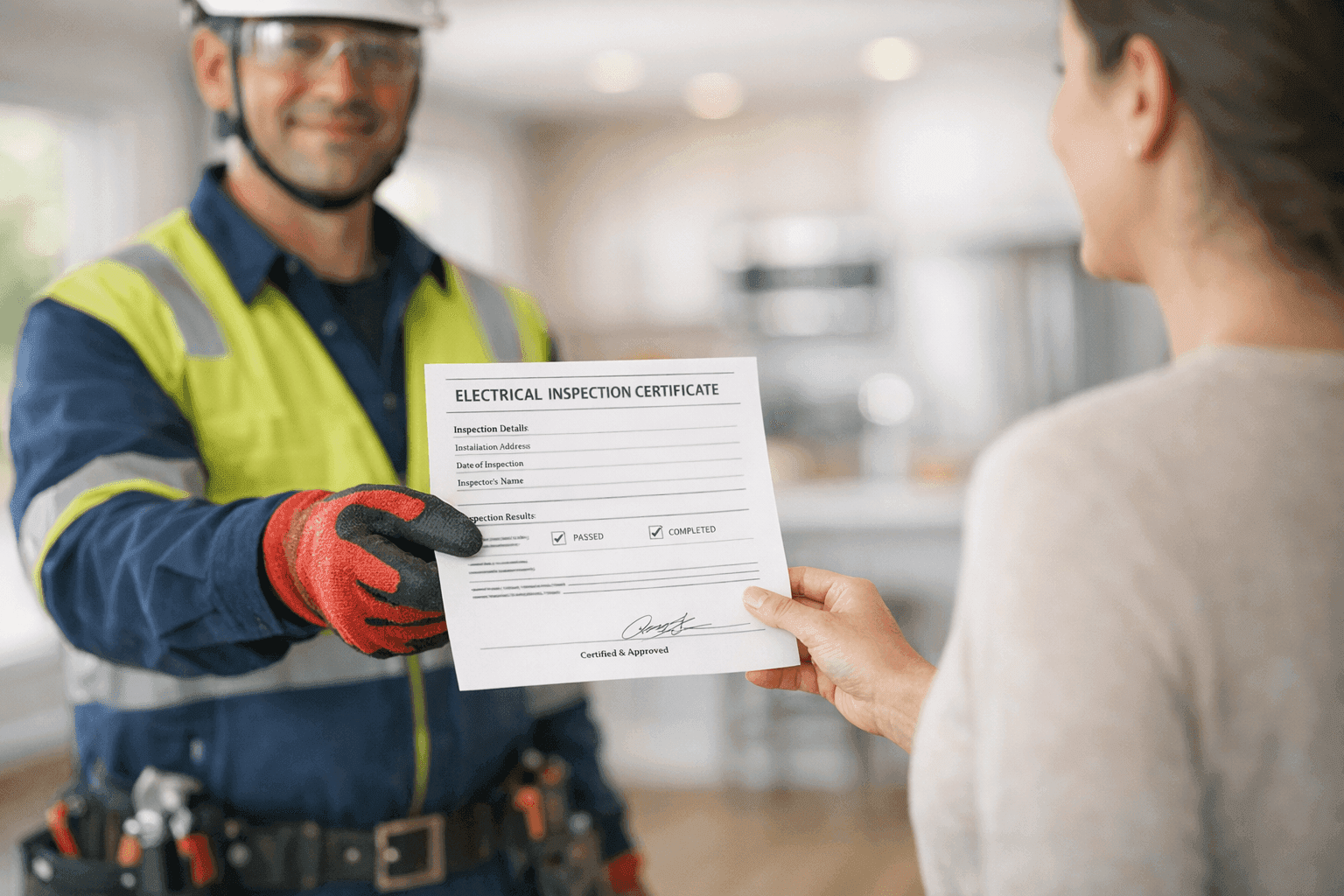
Owning a home is a journey—full of excitement and responsibility. One detail too many folks overlook? The paperwork that proves your home is electrically safe. That’s where electrical certificates come in.
You wouldn’t drive a car without a license, right? Your home’s electrical system needs its own “license to operate.” Let’s break down what homeowners need to know—before it becomes a headache.
What Is an Electrical Certificate? ⚡
Think of an electrical certificate as your home’s clean bill of health. It’s a document, prepared by a licensed electrician, that confirms your wiring, outlets & switches, panels, and other key components meet legal and safety standards. This isn’t just paperwork. It’s proof that your electrical system is up to code and safe for everyday life.
Electrical certificates come in a few flavors:
- Electrical Installation Certificate (EIC): For new work or major rewiring.
- Minor Electrical Installation Works Certificate: For smaller jobs, like adding a new outlet.
- Periodic Inspection Report (EICR): For regular check-ups, especially if you’re buying, selling, or renting.
You might hear them called “compliance certificates” or “safety certificates.” Whatever the name, they’re your official record that the job was done right.
When Are Certificates Required?
Not every flickering light demands a certificate. But certain scenarios absolutely do:
- Selling or buying a home: No certificate, no smooth sale. Most lenders and buyers demand proof.
- Major electrical work: Rewiring, new panels, or adding circuits? You need proof the work meets the National Electrical Code (NEC) and local ordinances.
- Home renovations: If walls are coming down or new rooms are going up, certification is essential.
- Insurance purposes: Most insurance companies want to see up-to-date certificates after significant work—or they may question your claim if something happens.
Even smaller jobs, like new outlets & switches, sometimes require paperwork, especially if they involve wet areas (kitchens, baths) or upgrades to panels and breakers.
How to Obtain or Update Your Certificate
Getting certified isn’t mysterious—it’s a process, like getting a health checkup:
- Schedule a licensed electrician: Not all services are created equal. Make sure your electrician is trained and certified.
- Inspection or installation: The electrician evaluates or completes the work, following code and best practices.
- Testing: Circuits, wiring, and safety systems are tested for functionality and safety.
- Documentation: You receive the certificate, often with notes on what was checked, what was fixed, and when you should reassess.
If you’re in doubt, ask: “Will I receive a certificate for this work?” Any reputable electrician should answer yes for qualifying jobs. For more information, see the Electrical Safety Inspections page.
Benefits of Certification for Homeowners
Why bother with certificates? Here’s what they do for you:
- Peace of mind: Like a smoke detector, a certificate protects what matters most.
- Insurance protection: Valid certificates keep insurers happy and claims on track.
- Resale value: Buyers want proof your home is safe—certificates reassure them.
- Legal compliance: Avoid fines, delays, or headaches with local authorities.
- Preventing costly mistakes: Early detection saves money in the long run.
Common Certificate Questions
Q: My house is older. Do I need a certificate now?
A: If you’re selling, renting, or doing major work—yes. A periodic inspection (EICR) is your friend.
Q: Can I do the work myself and issue my own certificate?
A: No. Only a licensed electrician can issue official documents for legal and insurance use.
Q: How long do certificates last?
A: Typically, an EICR is valid for five years (sometimes less in rentals), but local codes vary. Always check with your local building department.
Q: I lost my certificate! What do I do?
A: Contact the electrician or company that performed the last inspection or work—they should have a record.
Quick Homeowner Safety Checklist 📝
Before you call, run through this basic list:
- Are any outlets or switches warm to the touch?
- Do lights flicker, especially when large appliances switch on?
- Do fuses trip or breakers flip frequently?
- Is there a burning smell near outlets or panels?
- Are extension cords used as permanent wiring?
If you checked yes to any of these, it’s time for a professional look—and possibly a new certificate.
DIY vs. Call a Pro
Some jobs look simple. Swapping a lightbulb? Go for it. Rewiring the kitchen? That’s pro territory. Remember, electrical certificates are only valid when issued by a licensed electrician. Mistakes can be deadly or invalidate insurance.
What the Pros Do On Arrival
When Angelic Electric arrives, here’s what to expect:
- Visual inspection of outlets, switches, panels, and wiring
- Testing with proper equipment (not just a flashlight)
- Review of any previous certificates and work
- Clear explanation of findings and next steps
No mystery. No jargon. Just honest, professional service.
Prevention & Maintenance
Staying ahead is easier than catching up. Schedule safety checks every few years—especially in older homes or before big purchases. Routine maintenance spots small issues before they become big ones.
Costs & Time Factors
Electrical certificates aren’t free, but they’re less costly than rewiring after a fire or a failed home sale. Most standard inspections take a few hours. Larger homes or complicated systems can take longer. Always ask for a time estimate before work begins.
When It’s an Emergency
If you smell burning, see smoke, or lose power unexpectedly—don’t wait. Call an electrician immediately. Emergencies don’t wait for business hours, and neither do we.
Seasonal Considerations 🌦️
Spring storms and winter freezes can stress your system. After a big weather event, consider a checkup—even if your home “seems fine.” Sometimes, hidden damage lurks behind walls.
Common Mistakes to Avoid
- Ignoring small electrical issues (“It’s just a flicker!”)
- Forgetting to update certificates after major work
- Hiring unlicensed contractors
- Losing track of paperwork
Stay organized. Keep your certificates in a safe place with your other important home documents.
Signs of Trouble
Listen to your home. Buzzing outlets, tripping breakers, scorch marks—these are cries for help. Don’t ignore them.
Timeline & Disruption
Most inspections or certifications are completed in a single visit. You might need to turn off some circuits for a short time. Your electrician will let you know how to prepare and what to expect.
Materials & Equipment
A certified electrician uses specialized tools—multimeters, testers, and code reference books. Homeowners don’t need these, but knowing they exist helps you appreciate the thoroughness of a true professional.
Why Local Codes Matter
Electrical codes aren’t the same everywhere. Your city or township may have extra requirements. That’s why it’s smart to work with an electrician who knows the area. If you need to learn more about local requirements, check with your municipal building department or see how our Certificates process works.
The Bottom Line: Protect What Matters
Electrical certificates aren’t just paperwork—they’re part of your home’s safety net. They support your insurance, boost your resale value, and most importantly, keep your family safe.
If you’re not sure where you stand, don’t wait. Get clarity—and peace of mind—today.
Call Angelic Electric now — or reach us anytime at 844-440-1817 .