What Are AFCI Breakers and Do You Need Them in Your Home?
Hidden Dangers: Why Electrical Fires Happen Fast
You might hear a quiet pop. Maybe you smell something faintly burning. But often, by the time you notice, an electrical fire has already begun its silent work behind your walls. Most folks don’t realize just how common these fires are—or how simple it is to reduce the risk.
At Angelic Electric, we see the aftermath too often. Families lose more than just lights; they lose peace of mind. That’s why understanding AFCI breakers isn’t just smart—it’s essential.
What Is an AFCI Breaker, Really?
Think of an AFCI (Arc Fault Circuit Interrupter) breaker as a vigilant lifeguard. Traditional breakers watch for big waves—major overloads or short circuits. AFCIs, however, are on the lookout for the sneaky rip currents: tiny sparks called arcs.
Arcs can happen when a wire gets pinched behind a picture frame or chewed by a mouse. They may be small, but they’re hot enough to ignite wood, insulation, or dust. The AFCI senses these arcs and cuts power before the sparks have a chance to become a fire.
The National Electrical Code (NEC) began requiring AFCI protection in bedrooms back in 1999. Today, the code covers nearly all living spaces in new homes—bedrooms, living rooms, hallways, and more (see NEC Article 210.12).
How AFCIs Prevent Electrical Fires
Picture a garden hose. If it bursts, water spills everywhere—that’s a short circuit, and your breaker trips. But if there’s a tiny pinhole and water sprays in a fine mist, it can go unnoticed for ages, causing hidden damage. Arcing faults are like that pinhole: small, persistent, often invisible.
AFCIs detect the unique signature of these arcs—patterns regular breakers miss. When the breaker senses a hazardous arc, it immediately shuts off the circuit. The fire never gets a chance to start.
AFCI vs. GFCI: What’s the Difference?
You might have heard of GFCIs (Ground Fault Circuit Interrupters), especially in bathrooms or kitchens. GFCIs are lifeguards too—but they’re focused on shocks, not sparks.
In short:
- AFCI: Stops electrical fires from dangerous arcs.
- GFCI: Stops electric shocks from water or ground faults.
Some outlets and breakers even combine both protections. But don’t assume one replaces the other. The Electrical Safety Inspections team at Angelic Electric checks for both.
Where Are AFCIs Required by Code?
The National Electrical Code is updated every three years. In most modern homes, AFCIs are required in:
- Bedrooms
- Living rooms
- Dining rooms
- Hallways
- Closets
- Finished basements
Older homes may not have AFCI breakers, but upgrades are strongly recommended—especially in spaces where fires can spread quickly. Always check your local code, or have an electrician review your panel for compliance.
Signs Your Home May Need AFCI Upgrades ⚡
Not sure if you’re protected? Here’s what to look for:
- Home built before 1999 (likely no AFCIs)
- Panels with only standard breakers
- Frequent tripping of breakers with no clear cause
- Outlets or switches that feel warm or buzz
- A history of wiring repairs, rodent problems, or DIY electrical work
If any of these sound familiar, schedule an electrical safety inspection soon.
Quick Safety Checklist: Do You Have Arc Protection?
Take five minutes to walk through your home. Check your breaker panel:
- Are any breakers labeled “AFCI”?
- Do you see “Test” buttons on some breakers?
- Are there rooms (like bedrooms or living spaces) without GFCI or AFCI outlets?
If in doubt, snap a photo of your panel and call Angelic Electric. We’ll help you figure it out.
What Happens During a Professional AFCI Upgrade?
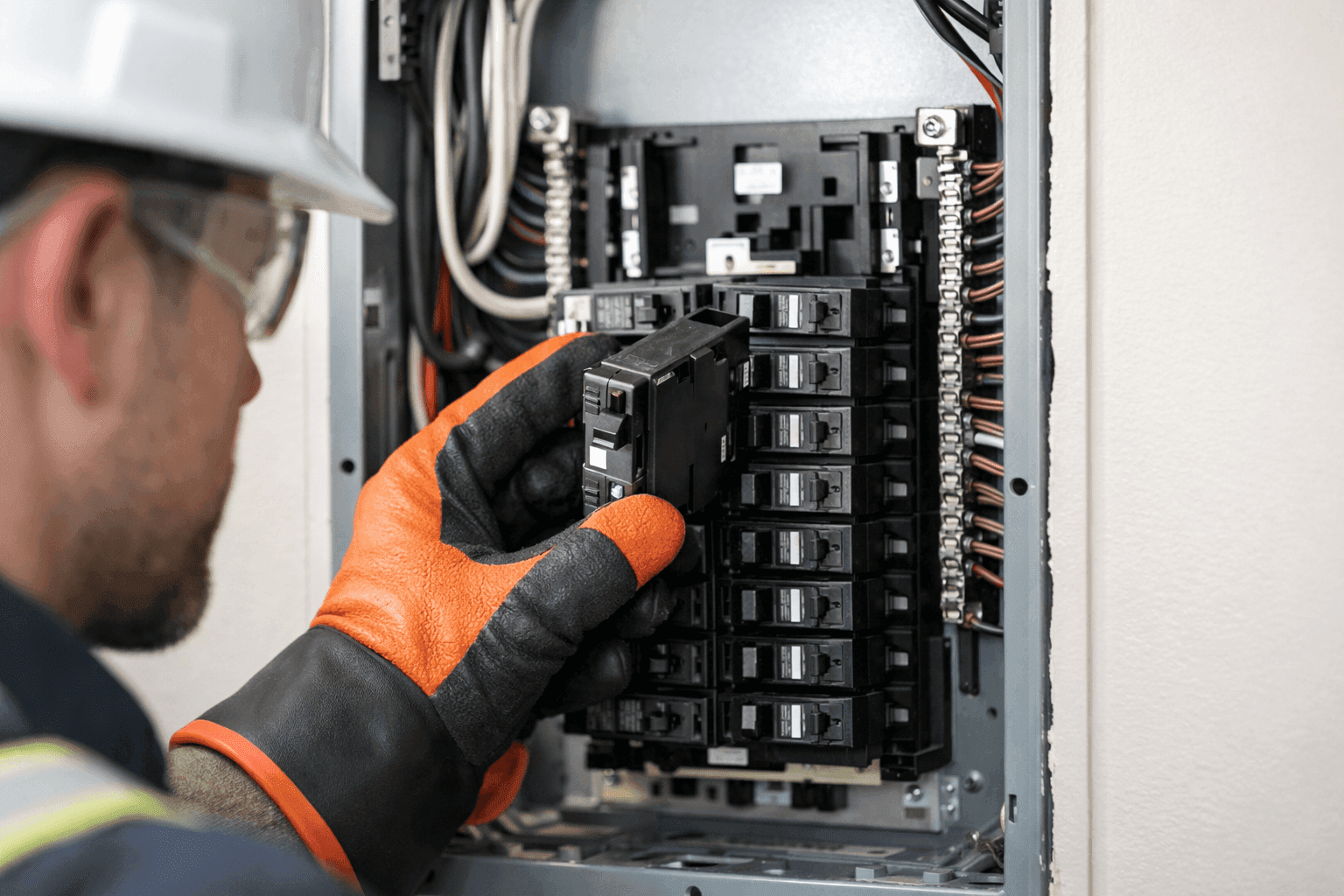
Bringing your panel up to code isn’t a dusty, chaotic mess. Here’s how the process works:
- Assessment: Your electrician checks the panel, wiring, and code requirements.
- Planning: We identify which circuits need AFCI protection.
- Installation: Old breakers are replaced with AFCIs, one at a time.
- Testing: Circuits are tested for proper arc detection and function.
- Cleanup: No debris left behind—just peace of mind.
Most upgrades take a few hours, with minimal disruption to your day.
AFCI Installation: Why DIY Isn’t Worth the Risk
Breaker panels are not a place for trial-and-error. Mistakes can lead to fires, shocks, or expensive damage. Even if you’re handy, installing AFCIs means working with live electricity and understanding circuit loads.
A licensed electrician has the tools and know-how to do it right. Plus, most local codes require a permit and inspection for these upgrades.
Real-World Stories: When AFCIs Save the Day
We’ve seen AFCIs trip after a nail punctured a hidden wire. We’ve found evidence of arcs behind walls—just inches from a child’s bedroom. In these cases, the AFCI breaker quietly prevented disaster. You may never know when it saves your home, and that’s the point.
Common Mistakes: Don’t Rely on Outdated Protection
- Assuming GFCIs provide arc protection (they don’t)
- Forgetting to test breakers regularly
- Ignoring breaker trips—these are warnings, not annoyances
- Using extension cords or power strips as permanent wiring
If you’re unsure, have our Wiring & Circuits specialists review your setup.
AFCIs and Older Homes: Special Considerations
Older homes often have outdated wiring—knob-and-tube, aluminum, or brittle insulation. These systems are especially vulnerable to arcing faults. Upgrading to AFCIs in these houses is like adding fireproof walls.
If your home’s wiring hasn’t been inspected in years, now is the time. An AFCI upgrade is an investment in safety.
What Will an Upgrade Cost? And How Long Will It Take?
Costs vary by panel size, access, and the number of circuits needing protection. Most homeowners can expect to pay a few hundred dollars per breaker. Factor in the priceless value of preventing a fire—and the savings on insurance or repairs.
A typical upgrade takes less than a day. Your power may be off for short periods, but disruption is minimal. Our team works quickly and keeps you informed at every step.
When Is an AFCI Emergency Service Needed?
If you smell burning, notice frequent breaker trips, or see charring near outlets and switches, call for emergency service—day or night. These signs mean something’s wrong behind the scenes. Never ignore them.
Angelic Electric offers 24 hour service for urgent electrical needs. Don’t wait until it’s too late.
Keeping Your Home Safe: Maintenance and Testing
Like smoke detectors, AFCI breakers need occasional testing. Press the “Test” button monthly. If the breaker doesn’t trip, it may not be working.
Schedule regular Electrical Safety Inspections to catch hidden problems. Our electricians can spot trouble before it starts.
Frequently Asked Questions About AFCIs
Do AFCIs trip too easily?
No. If an AFCI trips, it’s usually for a real reason—don’t ignore it.
Can I add AFCIs to an older panel?
Most modern panels can be upgraded. Some older systems may need additional work.
Are combination AFCI/GFCI outlets available?
Yes—these offer both protections in one device.
Final Thoughts: AFCIs—A Small Upgrade, a Huge Impact
AFCI breakers may be unsung heroes, but they save lives and homes every year. Whether you’re building new, renovating, or just want peace of mind, this upgrade is one of the smartest moves you can make.
Power up your safety. Sleep easier. Let Angelic Electric handle the rest.
Call Angelic Electric now — or reach us anytime at 844-440-1817 .